ActivityPub Note: Streams, Collections, and Endpoints
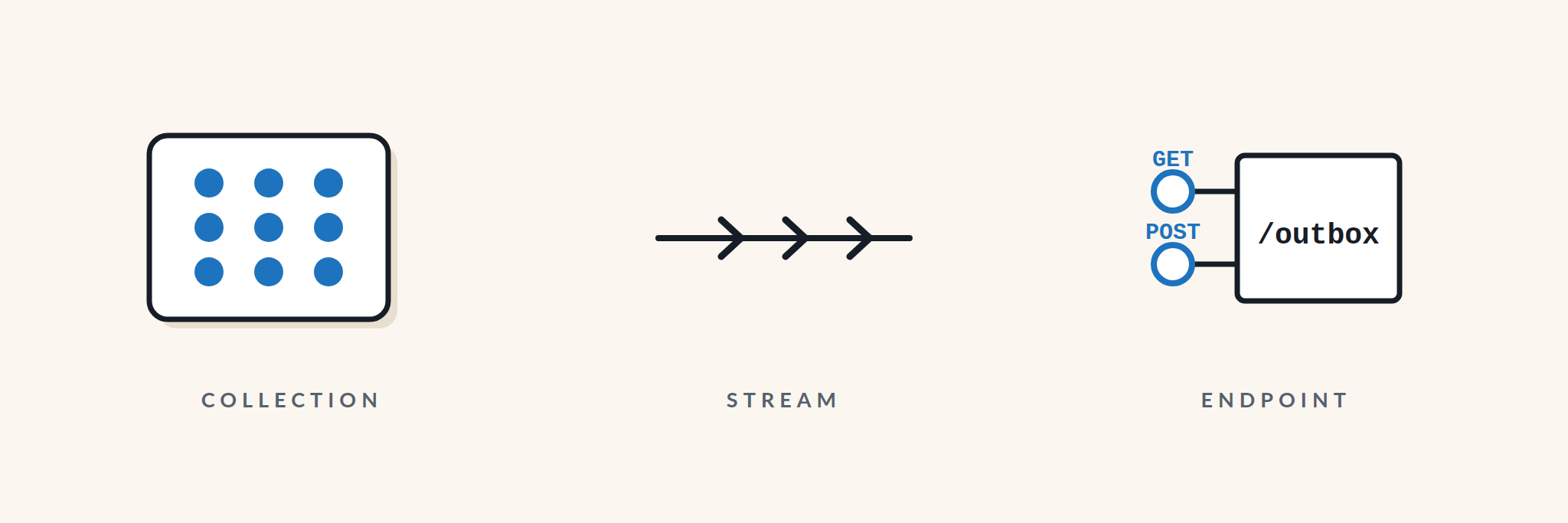
This article is an attempt to disentangle some of the ActivityPub specification terminology. First, some definitions. The specification uses these terms inconsistently, imprecisely or inaccurately. This leads to unnecessary protocol debates and interoperability issues. The following examples show how the text can be interpreted more clearly. Examples Objects are often wrapped in Activities and are … Read more
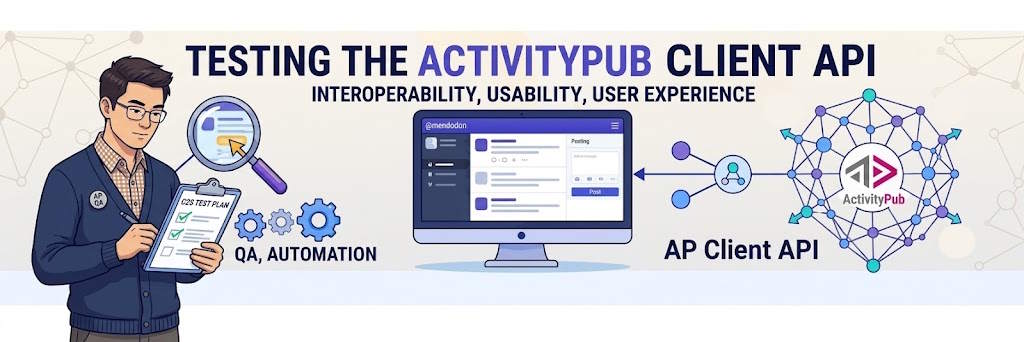
Testing the ActivityPub Client API

The toolkit is a web-based development tool for testing and debugging ActivityPub servers that implement the C2S API, built as a Vue 3 single-page application. It speaks to the target server directly over that API. No intermediary service holds the credentials or rewrites the requests, so each request the tool issues is one the server would receive from any other C2S client, which is what makes its results meaningful. Apart from an optional sidecar for diagnosing CORS issues, the application has no backend of its own: the production build is a set of static files that can be served from anywhere.

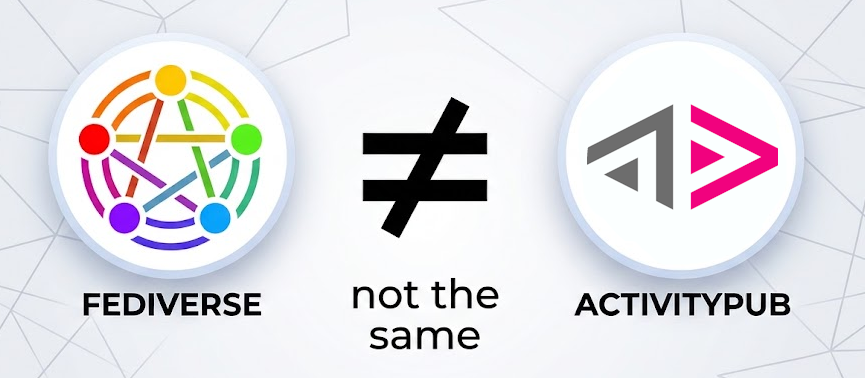
The Fediverse Is Not ActivityPub

When someone equates the Fediverse with the Mastodon implementation, fedizens are sure to correct them. The Fediverse is a network of many different implementations that interoperate through the Fediverse protocol stack, although Mastodon is the dominate implementation. When someone equates the Fediverse protocol stack with ActivityPub, they are making the same mistake. The two concepts … Read more

ActivityPub: What’s an Actor?

The question seems like it should have an obvious answer, but that’s not necessarily the case. There are several possible interpretations of the term actor in ActivityPub. So, what is an ActivityPub actor? A Profession? According to Oxford’s Advanced Learning Dictionary, an actor is “a person who performs on the stage, on television or in … Read more

ActivityPub Client API: A Way Forward

The ActivityPub Client-to-Server (C2S) protocol was envisioned as a cornerstone of the decentralized social web, along with the Server-to-Server (S2S) protocol. Standardized by the W3C in 2018, C2S defines how user-facing applications, such as mobile apps or web clients, and bots should interact with social servers using Activity Streams 2.0 and JSON-LD. In theory, it … Read more

Extending ActivityPub: A Recipe

Occasionally there are online discussions about using schema.org vocabularies with ActivityPub (AP) and Activity Streams 2.0 (AS2). There are many ways to do this, but this article will explore one approach using a schema.org Recipe type. The information is focused on AP/AS2 messaging rather than user interface considerations related to displaying the recipe. Although the … Read more

FIRM: Authorization Support

Initial ActivityPub authorization (authz) support has been added to the FIRM software. It’s a plugin and specific implementations can customize the policies. Unfortunately, ActivityPub has very minimal guidance on authorization and access control, so different implementations may use significantly different policies. This initial version is relatively simple. In the future, I plan to explore other, … Read more

ActivityPub: An Inbox is Not a Queue

It’s not unusual to see AP Fediverse posts discussing message queue middleware and message brokers and pondering whether using them is conformant with “inboxes” as defined in the ActivityPub Recommendation (AP). The answer is that conformance is not relevant because an inbox is not a queue. AP discusses an inbox from two perspectives: inbox endpoints … Read more

ActivityPub: A Box is not a Timeline

A key concept in the ActivityPub specification is the inbox and outbox. These are ordered collections of activities where the inbox contains activities received from other actors (typically on other servers) and the outbox contains activities produced by the actor owning the outbox. The inbox is part of the Server-to-Server (S2S) protocol that implements federation … Read more

Mastodon